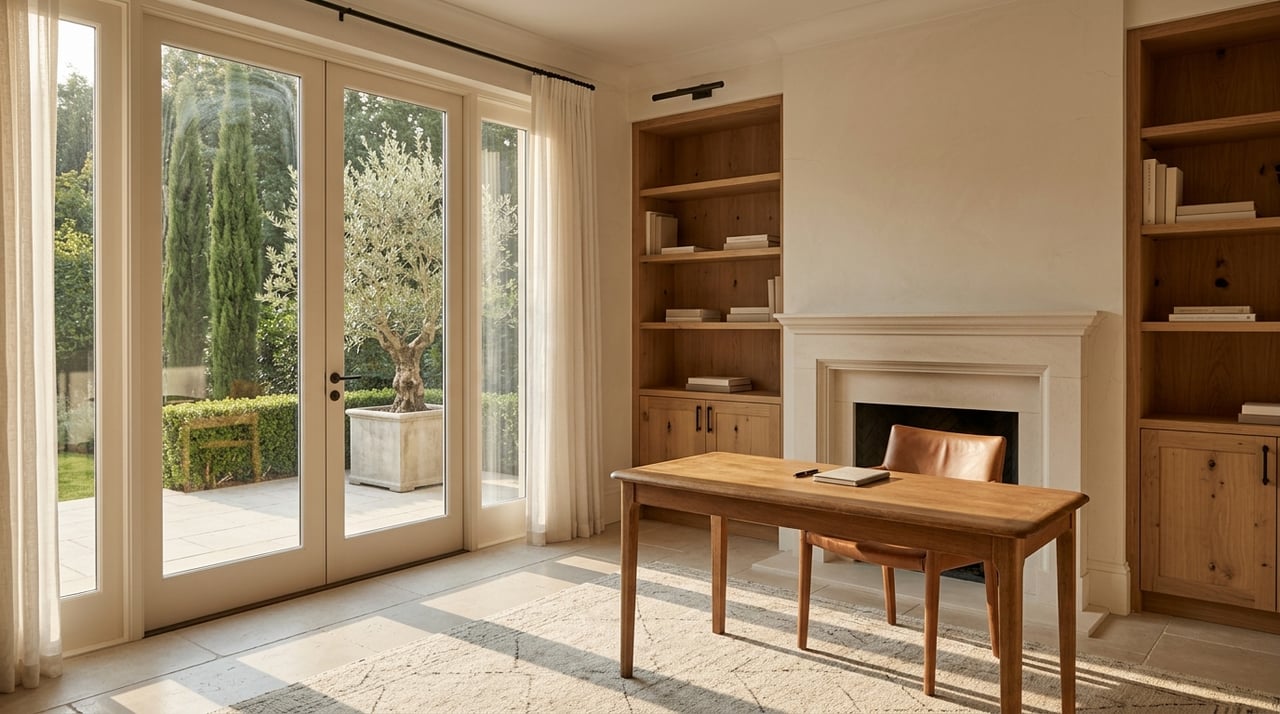
What does it really mean to position a Holmby Hills estate for legacy? In this pocket of Los Angeles, value is rarely just about square footage or a headline price. If you own, inherit, or plan to sell a significant property here, the real opportunity is to protect the land, the architecture, the privacy, and the transition strategy as one integrated asset. Let’s dive in.
Holmby Hills Is an Estate Market
Holmby Hills stands apart because it was shaped as an estate district, not simply as another luxury neighborhood. City planning materials and SurveyLA documentation describe early homes here as showcase residences, with a long-standing emphasis on architectural character and preserved estate scale.
That history still matters today. When a market is defined by large parcels, notable homes, and a planning culture that values preservation, your strategy has to reflect more than just current demand. You are not simply selling a house. You are positioning a legacy property within a highly specific market.
Legacy Value Starts With the Land
In Holmby Hills, land is often a major part of the value story. SurveyLA materials note examples such as Owlwood expanding through adjacent parcels, while the Singleton Estate sits on seven acres with designed landscapes.
For you, that means parcel size, privacy, mature grounds, and future use flexibility can influence value as much as the residence itself. In an estate setting, the relationship between the house and its grounds is often central to how buyers assess long-term significance.
Large landholdings also create optionality. Depending on the property, buyers may value the estate as a fully preserved residence, a long-term hold, or a carefully stewarded renovation opportunity. That broader lens is one reason generic pricing comparisons often fall short in Holmby Hills.
Architecture Shapes the Story
A legacy estate needs a clear narrative, and architecture is often at the center of it. Holmby Hills includes homes associated with notable designers such as Wallace Neff, Thomas Church, and Philip Shipley, along with other architecturally important contributors.
That provenance can elevate more than aesthetics. It can influence how a property is marketed, how it is preserved, and how future buyers perceive its place within the neighborhood. In a market like this, architectural identity is not a decorative detail. It is part of the asset.
Some homes also carry formal historic status. The Singleton Estate, for example, was designated a Historic-Cultural Monument, and the Los Angeles Conservancy notes that this designation provides protection from demolition and inappropriate alterations.
Why Broad Market Stats Can Mislead
Holmby Hills is a thin market, which means there are usually very few transactions at any given time. Public snapshots cited in the research reported 12 homes for sale in April 2026 and just 3 homes sold in March 2026, with a median sale price of $6.9 million.
That low volume matters because small sample sizes can make neighborhood statistics noisy. A single sale can skew price trends, days on market, or perceived momentum. If you are making decisions based on broad Los Angeles averages, you may miss what actually drives value at the estate level.
In practice, this means each property deserves estate-specific analysis. Lot characteristics, architectural pedigree, designation status, privacy profile, and positioning strategy may matter more than standard neighborhood metrics.
Renovation Should Be Preservation-Led
Many Holmby Hills owners ask the same question: can a significant estate be modernized without eroding value? Often, yes. But in this market, the right approach is usually not a generic remodel.
If a property is designated or falls within a preservation framework, the regulatory path can change. The City of Los Angeles states that in HPOZ areas, exterior work including landscaping, additions, alterations, and new construction is subject to additional review and must complement historic character.
The City's Cultural Heritage Ordinance also requires review for proposed work affecting Historic-Cultural Monuments, with the Cultural Heritage Commission reviewing projects that would affect those properties. For you, that means design ambition should be matched by early diligence.
A smarter path is often preservation-led renovation. That approach does not assume a home must remain frozen in time. It means updates are planned with respect for the architecture, landscape, and review standards that may shape what is possible.
Preservation Incentives Can Matter
Stewardship is not only about restrictions. In some cases, there are tools that can support thoughtful ownership.
City Planning identifies the Mills Act as Los Angeles's most significant preservation incentive. According to the City, it can provide property tax reduction for owners of Historic-Cultural Monuments and contributing HPOZ properties, and Mills Act contracts renew automatically and transfer to new owners when a property is sold.
The City also notes that the California Historical Building Code can offer alternative methods for rehabilitating older structures. For income-producing historic properties, the same City resource states that a 20 percent federal rehabilitation tax credit may also be available.
These details can affect hold-versus-sell decisions. They can also shape how a property is presented to the next owner, especially when preservation and long-term operating strategy are part of the value proposition.
Privacy Is Part of the Asset
For many Holmby Hills owners, discretion is not a preference. It is part of the mandate. Research on family offices shows that privacy, security, and safeguarding reputation are material priorities, alongside functions such as risk management, tax planning, legal services, and concierge support.
That context matters in real estate. An estate sale can involve staff, family, trustees, advisors, and sensitive personal considerations. The more visible the owner or the property, the more important it becomes to manage exposure with intention.
This is one reason controlled distribution can make sense in Holmby Hills. In a market with limited inventory and few monthly sales, a private or curated process may help you limit unnecessary exposure while still reaching qualified buyers.
Selling Discreetly Requires Choreography
Not every estate benefits from maximum visibility at the outset. Some are best served through a tailored process that controls the narrative, protects privacy, and targets the right buyer universe first.
In practical terms, that may mean clarifying what information is shared, when it is shared, and with whom. In a thin market, selective outreach can be a rational strategy when aligned with the property's profile and your broader goals.
For a landmark home, a long-held family estate, or a trust-driven sale, the transition itself becomes part of the positioning. Buyers in this segment are often evaluating not just the property, but the seriousness, clarity, and discretion of the process around it.
Legacy Planning Includes the Transfer
For heirs and trustees, the central question is not always whether to sell. It is often how to evaluate the estate in a way that balances preservation, economics, and family objectives.
IRS guidance states that inherited property generally takes a basis equal to fair market value at the decedent's date of death, or at the alternate valuation date if elected. It also notes that gain on sale is measured against adjusted basis after improvements and selling expenses.
That is one reason timing, trust documents, title, and ownership structure should be reviewed carefully with legal and tax advisors before a decision is made. In Holmby Hills, the transfer plan can be just as important as the marketing plan.
A Practical Framework for Owners
If you are positioning a Holmby Hills estate for legacy, it helps to think in layers rather than in a single sale decision. A thoughtful process often starts with a few core questions.
Assess the property as a whole
Look beyond the residence itself. Consider the land, privacy, landscape maturity, architectural significance, and any designation status that may affect renovation or transfer.
Review preservation status early
Confirm whether the property is a Historic-Cultural Monument, located in an HPOZ, or eligible for preservation-related incentives. Early review can prevent costly assumptions later.
Match improvements to the asset
If updates are planned, align them with the property's architectural character and any applicable review standards. In many cases, strategic restraint protects value better than over-customization.
Evaluate sale strategy carefully
A public launch may be appropriate for some estates, while others benefit from bespoke distribution and controlled exposure. In a market this thin, process design matters.
Coordinate the advisory team
For inherited or trust-held property, legal, tax, and title review should happen before major decisions are made. A well-managed transition protects both value and optionality.
Stewardship Is the Real Positioning Strategy
In Holmby Hills, legacy is not created by marketing language alone. It is built through stewardship, which means treating the house, the land, the landscape, and the transfer strategy as one connected asset.
That is why positioning here requires more than conventional listing tactics. It calls for measured analysis, narrative control, and a process calibrated to privacy, preservation, and long-term value. If your estate deserves that level of attention, James Harris offers confidential, strategy-first guidance tailored to complex luxury properties.
FAQs
What makes Holmby Hills different from other luxury Los Angeles neighborhoods?
- Holmby Hills is defined by estate-scale parcels, architecturally notable homes, and a planning history that emphasizes preserved character.
Can you modernize a Holmby Hills historic home?
- Often yes, but if the property is a Historic-Cultural Monument or located in an HPOZ, exterior work, additions, landscaping, and other changes may be subject to City review.
Why does privacy matter when selling a Holmby Hills estate?
- Privacy, security, and reputation are important concerns for many high-net-worth owners, and the neighborhood's limited inventory can make curated buyer outreach a practical strategy.
What should you check before selling a Holmby Hills legacy property?
- Key items include title, designation status, preservation obligations, Mills Act status, and tax basis.
Why is estate-specific analysis important in Holmby Hills?
- Because transaction volume is very low, broad market statistics can be misleading, so pricing and positioning should reflect the specific land, architecture, and stewardship profile of the estate.
