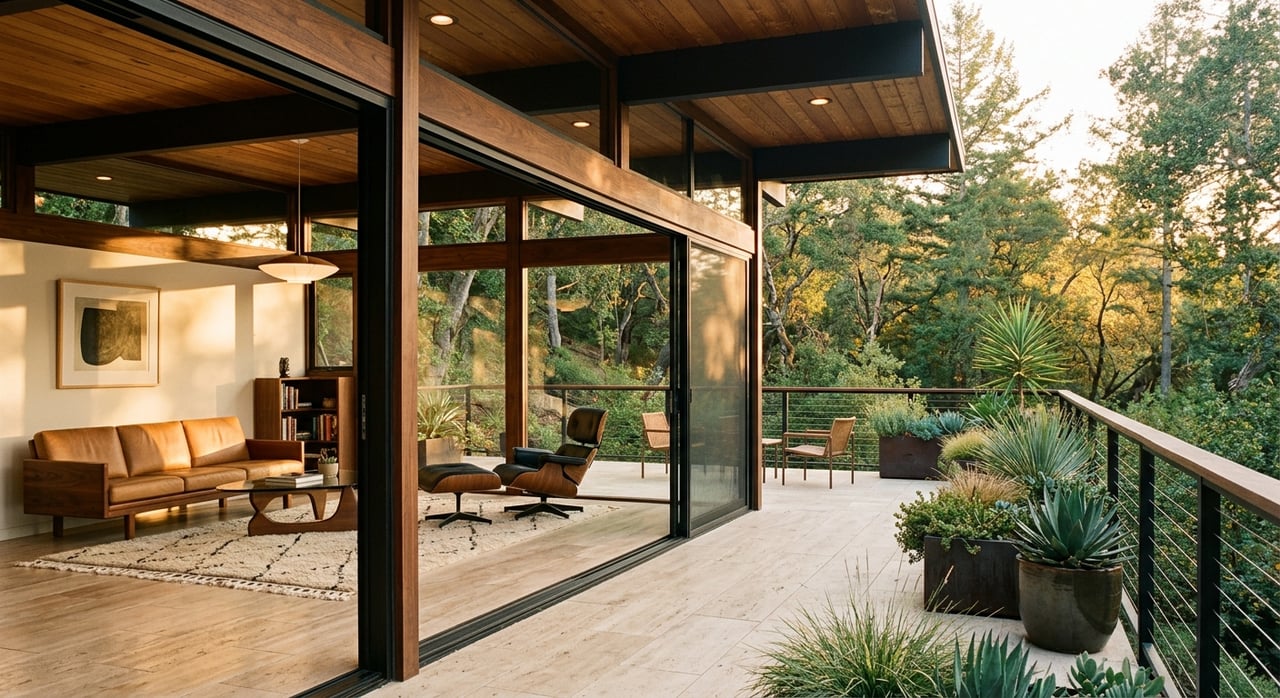
If you are drawn to the Hollywood Hills, you are probably not just shopping for square footage. You are looking for architecture, views, privacy, and a home that feels shaped by Los Angeles itself. In a market where site and design are closely linked, understanding the difference between modern and midcentury living can help you focus your search and avoid costly missteps. Let’s dive in.
Why Hollywood Hills Feels Distinct
Hollywood Hills is not one single subdivision. It is a collection of hillside neighborhoods above Hollywood, including areas such as Laurel Canyon, Outpost Estates, Mt. Olympus, Nichols Canyon, Beachwood Canyon, Hollywood Dell, and Lake Hollywood Estates, within a broader planning area that also includes Hollywood, Los Feliz, East Hollywood, and Griffith Park.
That matters because a Hollywood Hills address often tells you only part of the story. The setting, slope, road access, and planning context can shape how a property lives day to day just as much as the architecture itself. For buyers at the luxury end of the market, that makes local knowledge especially important.
The City of Los Angeles recently updated the Hollywood Community Plan in January 2025. According to the city, the plan is designed to direct growth away from sensitive hillside areas, conserve open space in the Santa Monica Mountains, protect historic and cultural resources, and apply hillside construction rules in areas with constrained access and geotechnical sensitivities.
In practical terms, a view home here is never just about the view. It is also about what the lot allows, how the home relates to the hill, and what long-term ownership may require.
Midcentury Living in the Hills
Midcentury living in Los Angeles is closely connected to the Case Study House program, launched in 1945 to rethink postwar housing through modern materials and economical construction. By 1966, 37 projects had been initiated and 25 were realized, helping spread the midcentury modern aesthetic across Southern California.
In the Hollywood Hills, that design language became one of the classic answers to hillside living. These homes often feel light, horizontal, and open, with a strong connection between interior rooms and the landscape beyond the glass.
The Stahl House remains one of the clearest examples. The Los Angeles Conservancy describes it as a defining expression of postwar Los Angeles living, using glass-and-steel construction, dramatic roof overhangs, and large panes of commercially available glass on a steep hillside site.
Another useful reference is the Ward-Berger House by Richard Neutra. Its one-story L-shaped plan was designed for indoor-outdoor living, with sliding glass doors opening to a patio and built-ins that made the interior compact and highly functional.
What Midcentury Often Feels Like
When you tour a midcentury home in the Hollywood Hills, you may notice a few recurring qualities:
- Strong orientation to the view
- Broad planes of glass
- Clean lines and efficient layouts
- Indoor-outdoor flow centered on patios or terraces
- A sense of lightness, even on challenging lots
At its best, midcentury architecture feels calm and effortless. The home frames the landscape rather than competing with it.
Modern Living in the Hills
If midcentury is the iconic version of hillside Los Angeles, modern architecture in the Hollywood Hills is often the more sculptural and experimental evolution of that idea. Getty describes Los Angeles as a laboratory for residential innovation, where climate and varied terrain encouraged architects to rethink the conventional dwelling.
Few architects express that more clearly than John Lautner. The Los Angeles Conservancy notes that his work used large planes of glass, exposed wood, and concrete as both structural and sculptural elements, producing homes that could feel organic, futuristic, and deeply tied to their sites.
The Chemosphere is one of the best-known examples. Designed for a steep lot, it sits on a concrete column, uses windows on all sides, and connects to the hillside with a patio. It shows how modern architecture in the Hills can turn a difficult site into the defining feature of the home.
This is a key distinction for buyers. Many modern homes in the Hollywood Hills were designed to look out over the canyon rather than back toward the street. Some occupy lots that may once have seemed nearly unbuildable, which makes site engineering and access part of the home's identity.
What Modern Often Feels Like
Compared with classic midcentury homes, modern hillside residences may offer:
- More dramatic structural expression
- Stronger sculptural forms
- Site-specific design for steep terrain
- More experimental use of glass, wood, and concrete
- A bolder relationship between house and landscape
For some buyers, that creates a stronger sense of architectural authorship. For others, it can mean more complexity in maintenance, alterations, or future planning.
Midcentury vs. Modern
If you are comparing the two, the difference is not always about age alone. It is often about how the house approaches the hillside.
| Style | Typical Feel | Relationship to Site | Common Appeal |
|---|---|---|---|
| Midcentury | Light, horizontal, open | Frames the view with calm efficiency | Classic indoor-outdoor Los Angeles living |
| Modern | Sculptural, expressive, experimental | Uses the hill as a design driver | Bold architecture and site-specific presence |
In the Hollywood Hills, both styles can be exceptional. The right fit depends on whether you want restraint and clarity, or something more dramatic and engineered around the terrain.
What to Notice Before You Tour
In the Hills, architecture should never be evaluated in isolation. The City Planning guidance on hillside regulations makes clear that these communities involve constrained access and geotechnical sensitivities, with limits that can affect grading, hauling, and construction hours.
That means early-stage buyers should pay close attention to how a property actually functions, not just how it photographs. A strong showing online does not always reveal the realities of daily access or long-term upkeep.
Site Details That Matter
Before or during a tour, pay close attention to:
- Driveway steepness
- Parking availability
- Turnaround space
- Retaining walls
- Drainage patterns
- Usability of patios, decks, and outdoor areas
These details may sound secondary, but they often define the ownership experience in hillside neighborhoods.
Original Features vs. Alterations
If you are considering an architectural home, ask what is original and what has been changed. The Los Angeles Conservancy notes that some Case Study Houses have been significantly altered or lost, which makes preservation and design integrity important considerations in this segment of the market.
For buyers who value architecture as much as location, this is more than a style question. It can affect future renovations, resale positioning, and the home's long-term significance.
Wildfire Readiness Is Part of Ownership
In hillside areas, wildfire readiness is not optional background information. The Los Angeles Fire Department states that property owners in Very High Fire Hazard Severity Zones must maintain vegetation year-round within 200 feet of structures, keep roofs clear of combustible debris, and follow detailed brush-clearance requirements.
LAFD also warns against brush clearance on Red Flag days. For buyers, this is an important reminder that a Hollywood Hills home can offer extraordinary views and privacy, while also requiring ongoing attention to vegetation management and exterior maintenance.
This does not make hillside ownership less appealing. It simply means the lifestyle comes with a practical stewardship component, and sophisticated buyers tend to account for that early.
Why Strategy Matters in Hollywood Hills
The Hollywood Hills market rewards buyers who understand both architecture and context. A striking house may also come with steep access, preservation considerations, or site constraints that change the way you evaluate value.
That is why the search process here benefits from more than broad market exposure. It benefits from careful screening, local planning awareness, and a clear understanding of how a property's design, lot, and regulatory setting work together.
Whether you are drawn to the clean lines of a classic midcentury home or the sculptural presence of a modern hillside residence, the strongest acquisitions usually begin with a disciplined reading of the asset itself. In the Hollywood Hills, style matters, but the site always has the final word.
If you are considering a Hollywood Hills purchase or preparing to position an architectural property for sale, James Harris offers discreet, strategy-led guidance tailored to high-value homes and privacy-sensitive clients.
FAQs
What defines midcentury living in the Hollywood Hills?
- Midcentury living in the Hollywood Hills is often defined by light-filled interiors, broad glass openings, clean lines, indoor-outdoor flow, and a strong orientation to the view, shaped by design ideas popularized through the Case Study House program.
What makes modern homes in the Hollywood Hills different from midcentury homes?
- Modern homes in the Hollywood Hills often feel more sculptural and site-specific, using the hillside as a design driver through expressive forms and experimental use of materials such as glass, wood, and concrete.
What should buyers look for when touring a Hollywood Hills home?
- Buyers should look closely at driveway steepness, parking, turnaround space, retaining walls, drainage, usable outdoor areas, and whether important architectural features are original or later alterations.
Why do hillside regulations matter in the Hollywood Hills?
- Hillside regulations matter because Los Angeles applies rules in sensitive hillside areas that can affect grading, hauling, construction hours, and what owners may be able to change on steep lots.
What wildfire maintenance should owners expect in the Hollywood Hills?
- Owners in Very High Fire Hazard Severity Zones may need to maintain vegetation year-round within 200 feet of structures, keep roofs clear of combustible debris, and follow Los Angeles Fire Department brush-clearance requirements.
