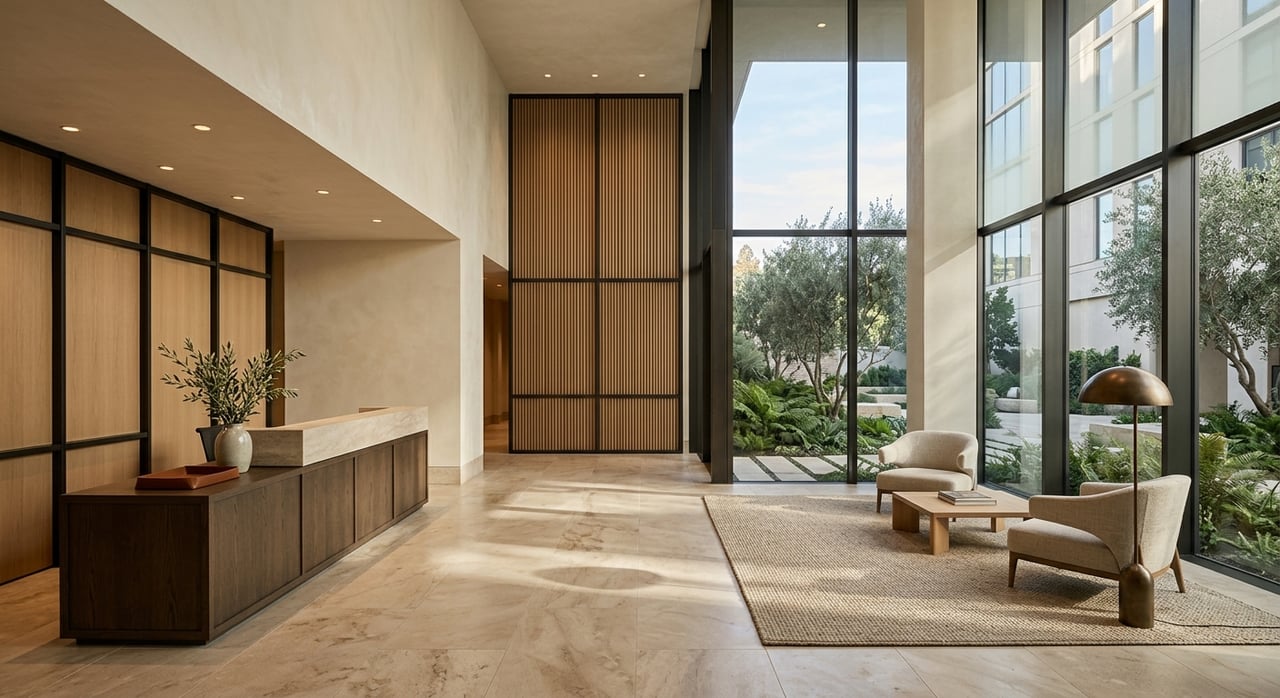
If you are buying in Los Angeles from abroad, from the East Coast, or as a part-time resident, Century City stands out for a simple reason: it can make luxury ownership feel easier. In one compact district, you can find full-service towers, estate-like enclaves, and a polished urban setting between Beverly Hills and Westwood. If you are weighing privacy, service, and long-term value, this guide will help you understand how Century City condo living really works and where different buildings may fit your goals. Let’s dive in.
Why Century City draws global buyers
Century City is a planned 176-acre neighborhood in the City of Los Angeles with a rare mix of business, retail, hospitality, and residential uses. The district is anchored by Westfield Century City, the Fox studio lot, and the Century Plaza core, which gives it a strong sense of infrastructure and daily convenience.
That matters if you want a home that works well even when you are not in Los Angeles full time. According to the Century City BID, the area has about 6,000 residents, about 50,000 employees, and more than 2,500 businesses, along with supplemental clean, safe, and beautification services such as private security patrols, street cleaning, and maintenance of medians and fountains.
For many international and bi-coastal buyers, that managed environment is part of the appeal. You are not just buying square footage. You are buying a district that tends to feel organized, polished, and easy to navigate.
What matters most in luxury condo living
For global buyers, the decision usually goes far beyond finishes or views. In Century City, the bigger questions are often about service level, privacy, and ease of use.
A well-run building can absorb a surprising amount of daily life for an absentee owner. Features like 24/7 guard gates, valet, concierge, private elevator access, storage, and staffed common areas can make ownership feel much more seamless if you travel often or split time between cities.
This is why comparing buildings only by price per square foot can miss the point. Two residences in the same neighborhood may offer very different ownership experiences based on staffing, arrival sequence, amenity depth, and the building’s overall approach to privacy.
Four ways to live in Century City
A helpful way to evaluate Century City is to sort the residential options into four broad categories. This gives you a clearer view of lifestyle fit than a simple new-versus-old comparison.
Trophy tower living
If you want skyline presence, strong brand recognition, and a highly serviced experience, this category is the top tier. In Century City, The Century and Park Elm at Century Plaza sit at the front of that conversation.
These buildings tend to appeal to buyers who want a residence that feels like a private club with polished staffing and a strong identity. For many cross-border buyers, that can be especially attractive because the product is legible, service-heavy, and easy to use.
Newer luxury with hospitality DNA
Some buyers want newer construction and amenities that feel almost hotel-like in their efficiency. Park Elm fits that profile well, and the Fairmont Century Plaza residences provide useful context for how Century City packages hospitality-style convenience for part-time use, even though those residences are lease product rather than conventional condos.
This category often works for buyers who value modern infrastructure, current design, and a stronger plug-and-play ownership model. It can be a practical fit when your schedule leaves little room for friction.
Classic full-service high-rise living
If you value established buildings with long-standing reputations, Century Towers and Century Park East are important options. These communities offer a more classic Century City ownership experience, often with broad amenity packages and proven residential pedigrees.
For some buyers, this category offers flexibility. You may find stronger inventory depth, more variety in layouts, and a balance between service and value that feels compelling in an established building.
Low-density privacy-first living
Not every luxury buyer wants a tall tower. Le Parc and Century Woods appeal to people who prefer greenery, quieter surroundings, and a more residential atmosphere.
These communities compete less on skyline drama and more on privacy, landscaping, and a softer day-to-day experience. If your idea of luxury is discretion and calm rather than vertical living, this category deserves serious attention.
The Century: polished, private, and club-like
Completed in 2010, The Century is a 42-story Robert A.M. Stern tower with 140 residences set within a four-acre garden. Official project materials emphasize private elevator lobbies, an outdoor lap pool with cabanas, fitness and spa treatment rooms, a screening room, a children’s playroom, a business center, wine storage, private dining, an on-site restaurant with terrace, and an Assouline culture lounge.
For a global buyer, the key takeaway is the building’s emphasis on privacy and service. The private elevator lobby experience and curated amenity mix support a lock-and-leave lifestyle while still feeling distinctly residential.
This is often the right fit if you want a trophy tower with a strong identity and a refined, highly managed feel. It suits buyers who care as much about ownership experience as they do about the residence itself.
Park Elm: newer construction and deep amenities
Park Elm at Century Plaza is one of Century City’s newer luxury offerings, with two 44-story residential towers completed in 2022 and designed by Pei Cobb Freed & Partners. Official sales materials emphasize estate-style floor plans, penthouses, and unimpeded ocean, hill, and skyline views.
Its amenity package is notably deep. Residents have access to a 24/7 guard gate, valet, doorperson, concierge, wine room, library lounge, game room, catering kitchen, private dining room, screening room, business center, locker rooms with steam and sauna, pilates and yoga studios, fitness center, landscaped gardens, outdoor dining terrace, pool with cabanas, meditation lawn, event garden, dog park, and secure storage.
If you are comparing buildings through the lens of convenience, Park Elm is one of the clearest choices. It tends to make sense for buyers who want newer construction, broad amenities, and a service structure that can support frequent travel or part-time use.
Century Towers and Century Park East
Century Towers, completed in 1964 and designed by I.M. Pei, was the first residential high-rise in Century City. Its official amenity list includes 24-hour full-service staffing, gated entry, valet, doorman, concierge, switchboard, two tennis courts, a fitness center and Finnish sauna, pool with outdoor deck, private storage lockers, guest parking, and separate maids’ or office units.
For buyers drawn to mid-century architecture and a building with long-established stature, Century Towers remains a foundational option. The combination of service, history, and architectural pedigree can be a meaningful part of the value story.
Century Park East offers a different kind of appeal. Public listings describe it as a large, established full-service community with nearly 500 units, with amenities such as valet parking, doorman service, 24-hour security, a heated or Olympic-size pool, fitness center, tennis or pickleball courts, guest parking, storage, and dog-friendly features.
This building can work well if you want classic Century City positioning with broader inventory and a more flexible entry point within the submarket. For some buyers, that creates useful optionality without giving up core services.
Le Parc and Century Woods
Le Parc is a low-rise, French Normandy-style community completed in 1979 with roughly 176 residences on Empyrean Way. Public descriptions consistently highlight its gated, garden-like setting along with clubhouse space, two pools or spas, tennis courts, a fitness center, and guarded entry.
The appeal here is clear. You get a more residential, less vertical environment while staying in Century City, which can be especially attractive if you prefer privacy over prominence.
Century Woods takes that estate-like feeling even further. This early-1980s low-density enclave, designed by Cliff May, is known for guard-gated entry, clubhouse space, indoor and outdoor pools, spa, fitness center, tennis courts, and a setting that reads more like a private residential community than a typical condo development.
If your priority is quiet, greenery, and seclusion, Century Woods may be the strongest fit in the neighborhood. It offers a very different expression of luxury than the towers, but one that resonates deeply with many privacy-focused buyers.
What to evaluate before you buy
When you look past design and branding, a few practical questions become especially important in Century City. These details can shape your experience more than buyers often expect.
Match the building to your travel pattern
If you travel often, ask whether the HOA services truly support a lock-and-leave lifestyle. Guard-gated entry, staffed reception, valet, concierge support, and secure package handling can make a meaningful difference when you are away for long stretches.
Study the arrival experience
Privacy starts before you enter the residence. You should understand how the building handles guest access, valet flow, elevator access, and the degree of separation between public and private areas.
Confirm storage and support spaces
For bi-coastal or international owners, storage is often more important than expected. If you are using the property part time, secure storage for personal items, luggage, seasonal belongings, or household support can add real convenience.
Consider age and renovation cycle
Newer does not always mean better, and established does not always mean compromise. The better question is whether the building’s age, systems, and renovation cycle align with your tolerance for maintenance, your design preferences, and your long-term plan.
Long-term value in Century City
Century City’s value case rests on several durable themes. The district benefits from a managed public realm, limited high-quality residential supply, and continued development attention.
The neighborhood’s long-term story also includes transit. Metro’s D Line extension opened Section 1 on May 8, 2026, while Section 2 through Beverly Hills and Century City remains under construction, making transit access an ongoing value theme rather than a finished one.
For buyers, it helps to think about value in two ways. Some buildings derive strength from rarity, brand identity, and trophy status, while others are supported by usable space, broader inventory, and potentially lower carrying costs.
That distinction matters. The Century and Park Elm may appeal more to buyers who want a highly recognizable luxury product, while Century Towers and Century Park East may offer flexibility tied to established communities and proven liquidity. Le Parc and Century Woods, meanwhile, tend to compete on privacy and lifestyle depth.
Why strategic guidance matters
Century City may look straightforward on a map, but the buying decision is often nuanced. Two properties at similar price points can serve very different goals depending on whether you value discretion, ease of ownership, architectural pedigree, or long-term positioning.
That is especially true for global and cross-border buyers, where timing, access, and product selection matter as much as negotiation. A focused advisor can help you sort through the differences between buildings, identify the right ownership profile, and pursue opportunities that align with how you actually plan to use the property.
If you are considering a luxury condo in Century City and want discreet, strategic guidance tailored to your goals, James Harris can help you evaluate the market with the level of precision high-value purchases deserve.
FAQs
What makes Century City attractive for global condo buyers?
- Century City offers a compact, polished district with full-service residential options, strong daily convenience, and a managed public realm supported by the local BID’s clean and safety operations.
Which Century City buildings are best for lock-and-leave living?
- Buildings with strong staffing and service infrastructure, including The Century, Park Elm, and Century Towers, are among the clearest fits for buyers who want easier part-time ownership.
How does Park Elm differ from older Century City condo buildings?
- Park Elm is a newer luxury product completed in 2022 with a very deep amenity package and a more current hospitality-oriented ownership experience.
What is the appeal of Century Towers for buyers today?
- Century Towers combines I.M. Pei architecture, long-established status, and a full-service amenity profile, which can appeal to buyers who value pedigree and classic high-rise living.
Are there lower-density luxury options in Century City?
- Yes. Le Parc and Century Woods are well-known privacy-forward options for buyers who prefer landscaped, lower-rise, or estate-like residential environments.
What should you review before buying a Century City luxury condo?
- Focus on service levels, arrival privacy, storage, building age, renovation cycle, and whether the HOA setup matches how often you plan to live in or travel away from the property.
